What a decommissioning project should leave you with
Disposal disputes are rarely about whether a collection happened. They are about what happened afterwards. The documents a decommissioning project should produce, and why evidence built during the work beats evidence assembled after it.
The email that arrives six months later
A decommissioning project finished six months ago. The office was cleared, the equipment collected and the project signed off.
Then an email arrives from internal audit.
Can you confirm what happened to laptop serial number XYZ123? Was the data erased? Was the device recycled or resold? Where is the evidence?
Someone finds the collection docket. It confirms a truck attended the site and equipment was removed. But it does not identify that laptop or establish what happened to it afterwards.
The project was completed operationally. The evidence was not.
This is where IT asset disposal chain of custody is tested. Not on collection day, but when someone needs to trace a specific asset through removal, transport, processing and final disposition.
Most disposal disputes are not about whether a collection happened. They are about what happened afterwards, and whether anyone can demonstrate it.
A signed collection docket is a starting point. It is not a complete disposal record.
Built during, or reconstructed after
There are two ways to produce a decommissioning report.
The first is to capture asset information while equipment is being removed. Serial number, asset tag, equipment category and originating location are recorded at the point of removal, with the relevant collection and custody information.
The second is to collect everything, transport it away, and attempt to reconstruct the asset list afterwards.
The first approach produces records that can be reconciled. The second introduces gaps that may be impossible to close.
Consider an office clearance involving multiple floors. Equipment moves from desks to staging areas, from staging areas to pallets, and from pallets onto transport. At every stage, the original location becomes harder to establish unless it was recorded beforehand.
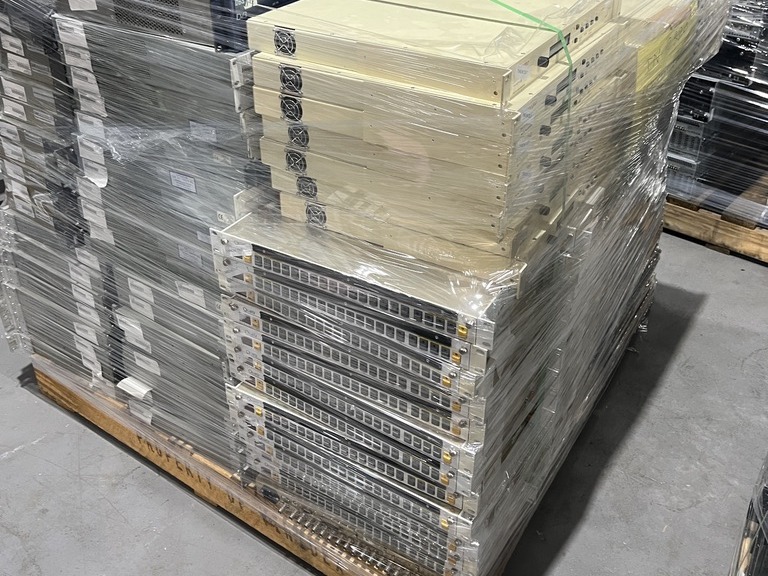
For Technology Decommissioning, this means deciding how assets will be identified before technicians begin removing workstations, monitors, docking stations and communications equipment.
For Data Centre and Infrastructure Decommissioning, the requirements may be more demanding. Servers, storage arrays, drives, switches and network appliances can have different identification and data-security requirements, even when removed from the same rack.
Records should identify custody handovers, not just equipment movements. Who released the assets? Who accepted them? When did custody change? Were any discrepancies recorded?
The information can be captured electronically or through controlled paper records. The important point is that it is recorded contemporaneously and remains connected to the equipment.
You cannot reliably reconstruct a missing serial number from a pallet count.
The documents, and what each one proves
A useful disposal reporting pack is not a collection of certificates with reassuring titles. Each document should answer a different question.
Inbound Receipt Report — What actually arrived?
This establishes what the processor received, the quantities and the recorded condition of the equipment.
It should distinguish the received inventory from the original collection record. If something was listed for collection but did not arrive, the discrepancy needs to be identified rather than silently absorbed into the final total.
Disposal Audit Report — What happened to each recorded asset?
The disposal audit report connects individual assets to their processing outcomes.
It should allow someone to search by serial number or asset identifier and establish whether equipment was sanitised, reused, resold, dismantled, destroyed or recycled.
This is the central asset reconciliation document. It connects the equipment received to the equipment accounted for at completion.
Erasure and destruction records — What happened to the data?
For data-bearing equipment, an asset disposition record is not enough.
The supporting records need to identify the sanitisation or destruction method, processing date and result for the relevant device or media.
Successful erasure, failed erasure, physical destruction and unresolved exceptions are different outcomes. They should not be grouped together under a general statement that equipment was securely disposed of.
A certificate of destruction provides evidence of the destruction activity described in it. Its value depends on whether the affected assets or media can be identified and connected to the underlying processing records. The same applies to a certificate of secure asset processing and disposition, which should tie the standard applied, the status and the completion date to each asset and storage device serial number.
Certificate of Recycling — What entered the recycling stream?
A Certificate of Recycling supports evidence of the recycling outcome.
Where serial tracking is required, it should connect identified equipment to the recycling records, with weights and unit counts by category.
Aggregate recycling totals are useful, but they cannot independently establish what happened to a particular serialised device.
Financial Reconciliation Report — What value was recovered?
Equipment selected for remarketing may generate financial returns.
Financial reconciliation records the resale proceeds or other recoveries, together with applicable charges and the resulting settlement.
Without reconciliation, the organisation may know its equipment was removed but have limited evidence of the commercial outcome.
Sustainability Report — What was recovered, reused or diverted?
Sustainability reporting should distinguish relevant material outcomes, including reuse, recycling and disposal.
Diversion figures are meaningful when the underlying categories, weights and calculation basis are clear. A blanket claim that equipment was recycled is not sufficient evidence of what happened to every material stream.
These reporting outputs should work together, rather than exist as unrelated documents. Shield Solutions provides serialised asset reporting, destruction and recycling certificates, financial reconciliation and sustainability reporting, supported by its Reporting & Client Portal.
Serial level or weight level
Not everything needs to be recorded by serial number.
There are legitimate reasons to use both serial-level and weight-level reporting. The mistake is treating them as interchangeable.
For data-bearing equipment, including laptops, servers, storage devices and removable media, serial-level tracking provides the connection between the asset and its security outcome.
The same applies to equipment recorded on a corporate fixed asset register. If finance or IT expects to retire an asset from that register, there needs to be a reliable way to match the disposal record to the original entry.
Weight-level reporting is appropriate for genuine commodity recycling streams such as loose cables, mixed non-data-bearing scrap and other bulk materials that do not require individual asset identification.
Paying for serial-level reporting on cable offcuts adds administration without meaningful control.
Accepting a weight-only receipt for a pallet of hard drives creates a very different problem. A total weight cannot establish whether a particular drive was present or securely processed.
The required evidence should be determined by data risk, asset value, contractual obligations and the organisation’s reporting requirements.
Some projects will need both approaches. Define which equipment belongs in each category before collection.
Where asset registers fail
Many disposal reconciliation problems began years before the equipment was removed.
A laptop was deployed without being entered into the register. A server changed locations without an update. A monitor was replaced, but its old asset record remained active. Equipment was transferred between departments without anyone recording the movement.
By the time a decommissioning project begins, the register may no longer represent what is physically present.
The disposal team can record what it finds. It cannot independently establish the history of equipment that was never properly recorded.
This creates two separate reconciliation tasks.
The first compares the expected asset register against equipment identified during removal.
The second compares the equipment removed against the final processing and disposal outcomes.
Both matter. A perfect disposal report cannot repair an inaccurate historic register, but it can identify the differences and establish what actually happened to the equipment recovered.
Unlisted assets should be recorded as exceptions, not excluded simply because they were absent from the original schedule.
A register maintained accurately from deployment through transfers, repairs and retirement is much easier to reconcile at end of life.
A checklist for the next project
Before approving the next collection or site clearance, establish the evidence requirements.
- Define the reporting scope. Which equipment requires serial-level tracking, and which material can be reported by weight or category?
- Agree on the starting register. Who supplies the expected asset list, and how will differences between that list and the physical equipment be handled?
- Identify the custody handover points. Who releases, receives and transfers responsibility for equipment at each stage? What records will confirm those handovers?
- Set the data security requirements. Which assets require sanitisation, physical destruction or another approved disposition? What evidence must be supplied for each outcome?
- Document the exceptions process. What happens when equipment is untagged, damaged, missing from the register, contains unexpected storage media or cannot be successfully erased?
- Nominate the reporting owner and sign-off authority. Who reviews the disposal audit report, resolves discrepancies and accepts the completed project?
- Agree on reporting deadlines and retention. When are receipts, certificates, financial reconciliation and final reports due, and where will the records be retained for future retrieval?
These decisions are much easier to make before the equipment leaves the premises.
They also allow the project team to distinguish between physical completion and documentary closure. An empty office or server room does not necessarily mean every asset has been reconciled.
What to ask for before collection
Ask for a sample reporting pack before appointing a decommissioning provider.
Check whether you can follow one serial number from collection through receipt, data treatment and final disposition. Confirm how exceptions are recorded, how financial outcomes are reconciled and how completed evidence will remain accessible.
The objective is straightforward: months after the project is finished, someone should be able to answer what happened to a particular asset without reconstructing the job from emails and memory.
That is what a properly documented decommissioning project should leave behind.